
When Tweets Stir a Nation
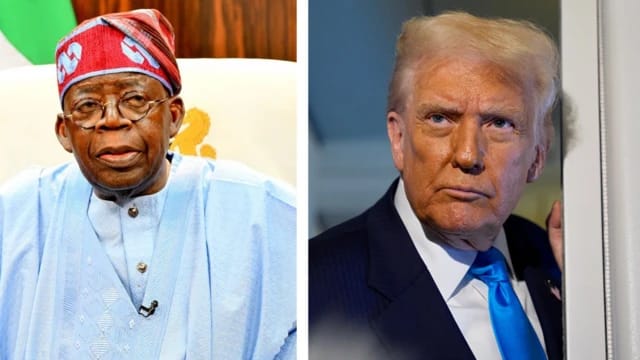
When former U.S. President Donald Trump speaks, the world listens, often with confusion, curiosity, or alarm. Over the weekend, his words once again rippled across continents. In a series of fiery social media posts, Trump accused Nigeria of allowing mass killings of Christians, declared the country a “nation of particular concern,” and threatened to halt U.S. aid while hinting at possible military action.
Within hours, Nigerian officials fired back, calling the claims false and dangerous.
The storm began with a phrase that flooded global headlines: “Trump threatens Nigeria.”
The First Post: Declaring Nigeria a ‘Country of Particular Concern’
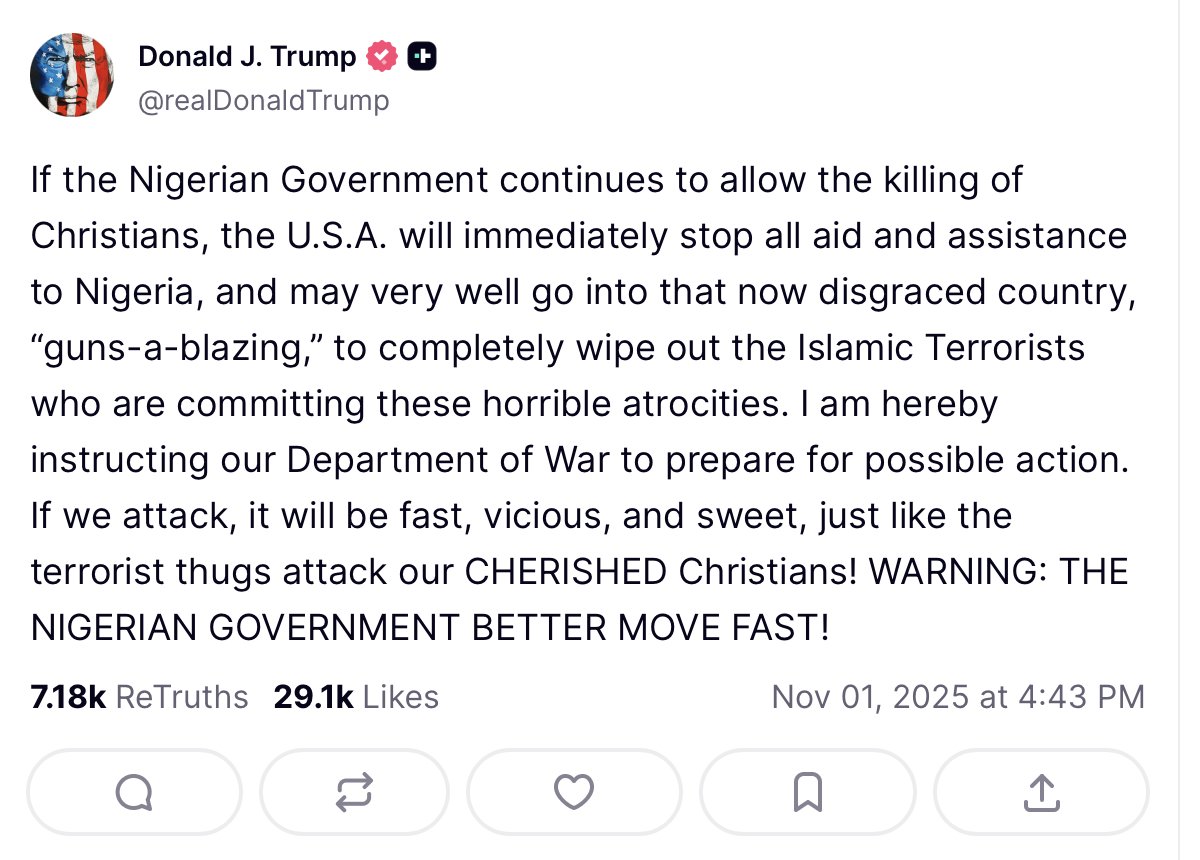
On October 31, 2025, Trump announced on his X account (formerly Twitter) that Nigeria had been added to the United States’ list of Countries of Particular Concern under the International Religious Freedom Act.
He wrote that “Christianity is facing an existential threat in Nigeria. Radical Islamists are responsible for this mass slaughter.”
International religious organizations and his political allies in the U.S. applauded the move, calling it a long-overdue step.
But in Nigeria, many saw it as an oversimplified accusation that ignored years of complex conflict where both Christians and Muslims have been victims.
The Escalation: ‘Guns-a-Blazing’
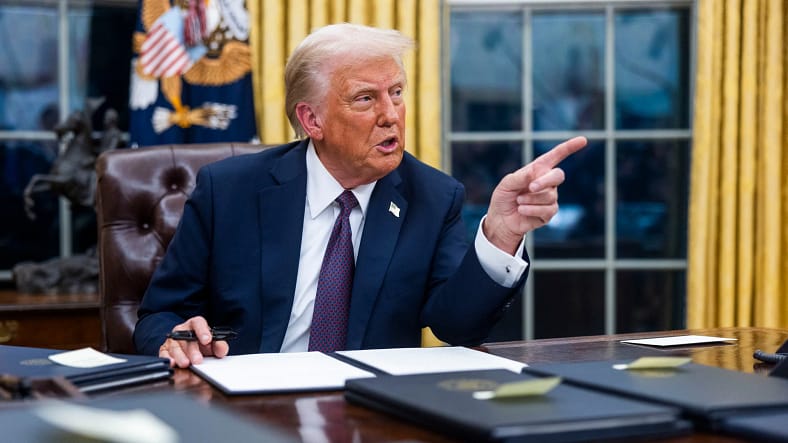
Barely 24 hours later, Trump’s tone turned more aggressive.
In another tweet, he warned that if Nigeria “continues to allow the killing of Christians,” Washington would “immediately stop all aid and assistance” and could “go into that now disgraced country guns-a-blazing.”
He went further, claiming to have ordered his “Department of War” to prepare for “possible action,” promising it would be “fast, vicious, and sweet.”
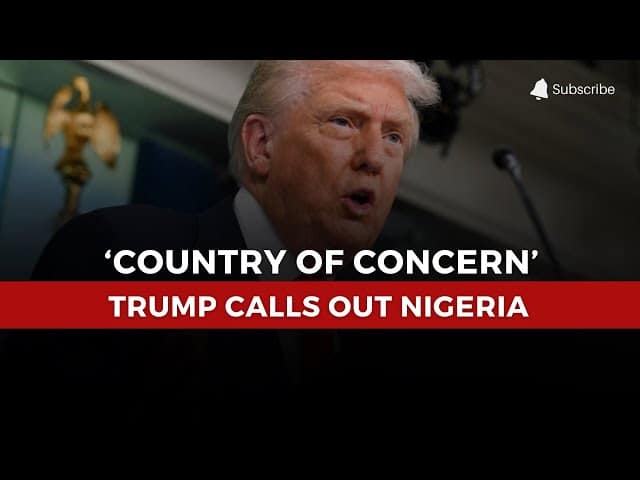
The statement shocked diplomats and defense analysts. To threaten an African democracy with military action, one that has partnered with the U.S. on counter-terrorism and regional stability, marked an extraordinary escalation.
Online, the words “Trump threatens Nigeria” began trending, sparking anger, confusion, and memes all at once.
Nigeria Responds: ‘We Are Not a Religious State’
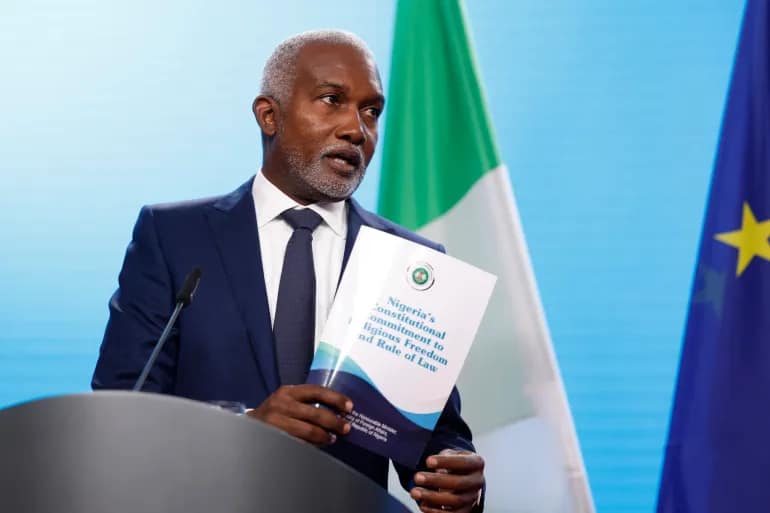
By November 3, 2025, Nigeria’s Foreign Minister, Yusuf Tuggar, responded publicly.
“It is impossible for there to be a government-backed persecution of any religion in Nigeria,” Tuggar said. “Our constitution guarantees freedom of religion and association.”
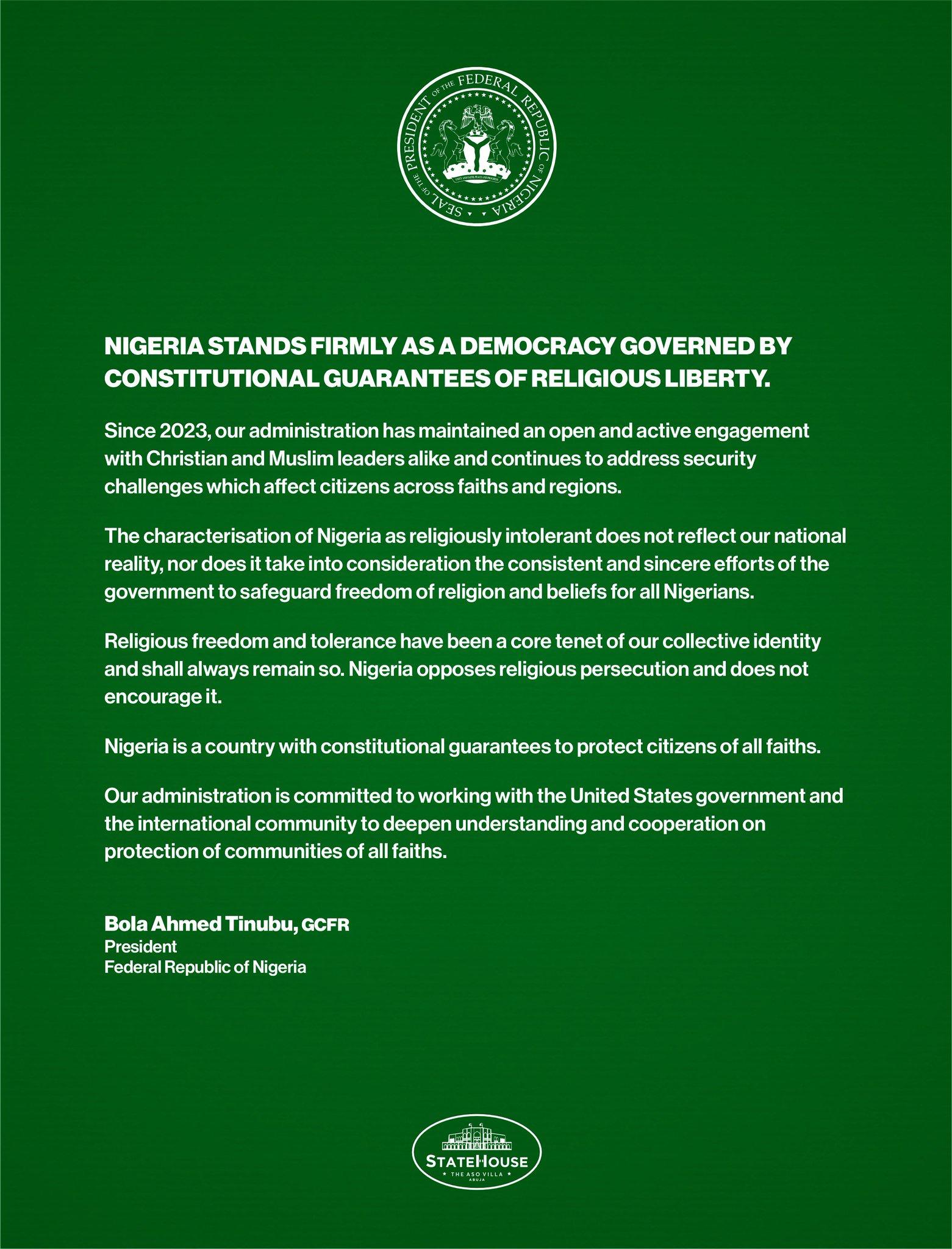
President Bola Ahmed Tinubu’s spokesperson added that Nigeria’s identity is one of religious coexistence, not persecution.
They urged Washington to verify its data before spreading narratives capable of igniting unnecessary religious tension.
Nigeria emphasized that while it battles terrorism and banditry, those conflicts are not faith-based. “Christians, Muslims, and people of all beliefs suffer alike,” one senior aide told Afrikanspective.
Behind the Words: Politics and Perception
Analysts believe Trump’s statement was not purely about Nigeria, but also about American politics.
His evangelical Christian base has long championed the issue of “persecution of Christians” abroad, especially in Africa.
By amplifying this narrative, Trump may be reinforcing his religious image as he prepares for another White House run.
Yet, experts argue that this framing oversimplifies Nigeria’s struggle.
Groups like Boko Haram and ISWAP have attacked both Christians and Muslims. Many deaths in the Middle Belt and Northern Nigeria stem from land conflicts, poverty, and ethnic tensions, not religious hatred alone.
Reducing the crisis to “Christians vs. Muslims,” Nigerians say, weakens the truth and deepens division.
The Diplomatic Ripple
Diplomatic circles across Africa are watching closely. The idea of an American military strike in Nigeria, even in rhetoric, has alarmed policymakers from ECOWAS to the African Union.
If the United States enforces sanctions or cuts aid, Nigeria’s security programs and humanitarian efforts could face setbacks.
At the same time, the controversy may push Nigeria to strengthen alliances with non-Western partners such as China, Turkey, and Russia.
“Trump’s words were not just about religion,” said a Lagos-based analyst. “They were about power and Africa’s place in global politics.”
Reactions from the Global Stage
From Washington to Abuja, opinions are deeply divided.
While some U.S. conservatives hailed Trump as a “defender of Christian values,” many international observers condemned his approach as reckless.
Nigerian youths, however, responded with typical humor and resilience. Memes flooded X, Instagram, and TikTok, with captions like:
“Trump threatens Nigeria, but our real enemy is NEPA.”
“Before Trump fights for Christians, he should fix his Wi-Fi.”
But behind the jokes lay a shared sentiment: Nigeria does not need external “saviors,” only justice, unity, and reform.
Conclusion: A Mirror to the World
This episode reveals how quickly global perception can shift with a single tweet.
It also exposes the imbalance of narratives, where Africa’s stories are often told about her, not by her.
While Trump threatens Nigeria with sanctions and rhetoric, the real work remains internal: uniting diverse communities, fighting insecurity, and reclaiming Africa’s voice on the world stage.
As Afrikanspective always says, “The world may talk about Africa, but only Africans can define her truth.”
